|

Current Exhibitions > The Man and his Music > Sholom Secunda |
A Short Biography
Adapted from Volume 2 of Zalmen Zylbercweig's
"Lexicon of the Yiddish Theatre" (1934)
|
|||
|
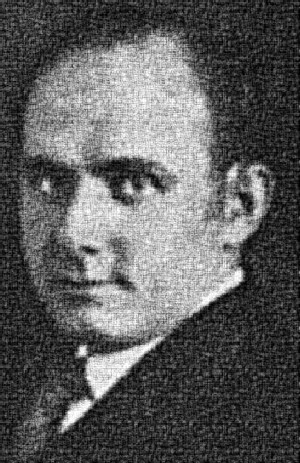
For the 1913-14 season, he became engaged for the "Odeon" Theatre as a chorus singer, composer and Shlikhot geyer, and on 16 January 1914 he staged at the Odeon the play, "Yoysher (Justice)," by Solomon Smulewitz, music by Sholom Secunda and Smulewitz." From 1915-1917 he was engaged at the Lyric Theatre, initially as a chorus singer and choir master, then as a conductor and orchestrated the old "historic" operetta repertoire. At the same time he studied orchestration for a year with the arriving composer Ernest Bloch. During wartime, S. was matron for several months in an American fleet, and after his release from his service, he entered into the Yiddish theatre in Newark (director -- Sidney Hart), where he remained for the upcoming season. He wrote the music to the operettas "Kinder kumt aheym (Children Come Home)" by Solotorefsky, "Di goldene tsayt (The Golden Time)" by Sh. Steinberg, and a single musical number for the staged melodramas. On 24 December 1918 at the Liberty Theatre, there was staged S.H. Cohen's "Dem ruv's tekhter (The Rabbi's Daughters)," and then S.H. Cohen's "Fraye shklafn (Free Slaves)," with music by S. 1920-21 -- S., for the first half of the season was the conductor in Philadelphia's Metropolitan Opera House (Director -- Boris Thomashefsky), and for the second half of the season he was in St. Louis. Around that time in Gabel's Folks Theatre, there was staged the play "Reyne gevisn (Clear Conscience)," with music by S. In the 1921-22 season, S. conducted and composed in Clara Young's Liberty Theatre, where he wrote the music for Boaz Young's "Jakele Blefer" (1 October 1921), and Israel Rosenberg's "Berele tremp," as well as individual numbers for various staged melodramas. During the 1922-25 seasons he was with Anshel Schorr in Philadelphia's Arch Street Theatre, where he wrote the music for the operetta, "Di amerikaner rebetsin (The American Rabbi's Wife)" by William Siegel, and later for "Di yidishe shikse," by Anshel Schorr (staged on 18 February 1927 in Brooklyn's Liberty Theatre); "A nakht fun libe (A Night of Love)" by Israel Rosenberg (staged on 8 December 1927 in the Liberty Theatre), "Der yidishe zinger (The Yiddish Singer)" by S.H. Cohen and A. Naumov (staged on 19 April 1924 in the Liberty Theatre)," "Yankl karamanshtshik," and "Reyzl fun slobodke (Rose From Slobodke)" by William Siegel, "Unzer torah'le" by Louis Freiman, "Di geferlekhe moyd" (Kidi) by William Siegel, and many numbers for melodramas. 1924-25 season -- S. conducted in New York's Grand Theatre, where he wrote music for melodramas, such as "Shlekhte khaveyrim (Bad Companions)" by Siegel et al. 1925-27 -- in the Hopkinson Theatre, where on 19 January 1926, there was staged by Misha German, "Mashka, a musical comedy by Israel Rosenberg, music -- Sholom Secunda," (which played for twelve weeks straight). On 6 September 1926 -- "Libe un frayntshaft, a comedy-drama by S.H. Cohen, music by S."; on 24 December 1926 -- "Margarita, libretto by Israel Rosenberg, music -- Sholom Secunda; on 8 February 1927 -- Israel Rosenberg's "Oyf yener zayt im, music by S." here, S. also wrote several musical numbers for Kalmanowitz's "Shtifmames (Stepmothers)." On 15 April 1927, through Aaron Lebedeff, there was staged in the Public Theatre Aaron Nager's operetta "Der kleyner milioner," with S.'s music. For the 1927-28 season, S. was engaged as a conductor and composer by Anshel Schorr in Brooklyn's Liberty Theatre, where on 27 September 1927 there was staged by Anshel schorr "Zayn yidish meydl (His Jewish Girl), libretto by Isidore Lash, music -- Sholom Secunda," and on 10 January 1928 -- "Ven libe ruft (When Love Calls), libretto by William Siegel, music by Sholom Secunda." 1928-30 -- S. was in the Rolland Theatre, where it opened on 25 September 1928 with L. Freiman's operetta, "Dos lid fun libe," with music by S.; on 9 November 1928, here through M. Michalesko, there was staged the melodrama "Zeyn-farshpilte-velt," by L. Freiman and S. Wolf, with music by S.; on 22 November 1928 -- L. Freiman's operetta "Der odeser khazan (The Odessa Cantor)," with S.'s music; on 21 December 1928, "Sinorita, a musical lustshpiel by Louis Freiman, music by Sholom Secunda"; on 21 February 1929 -- Siegel's play "Hertser fargesn nisht (Hearts Don't Forget)," with S.'s music; on 27 November 1929, staged by Misha German) -- William Siegel's operetta "Katya's khasene (Katie's Wedding)" with music by S., and on 21 November 1930 -- Israel Rosenberg and Yitzhok Friedman's comedy "Libe oyf oystsoln" with music by S. 1930-31 season -- in the Rolland Theatre there was staged "Zise momentn (Sweet Moments)" by L. Freiman and William Siegel, "Oy amerike" by N. Stutchkoff, "Ikh vil a kind (I Want a Child)" by Abraham Blum, and "Megn mener alts?" by A. Blum, with music by S. 1931-32 season -- S. again was engaged as a conductor and composer in the Rolland Theatre, which opened with Freiman's melodrama, with S.'s music, and soon thereafter there was performed S.'s orchestral adaptation of the folk melodies for Menachem Rubin's production of Sholem Aleichem's "200,000"; and on 25 December 1931 -- the operetta "Der gasn-zinger (The Street Singer)," by Abraham Blum, music by Sholom Secunda. 1932-33 season -- S. was co-director, conductor and composer in the Lyric Theatre, which opened on 1 October 1932 with Isidore Lash's operetta "A meydele vi du (A Girl Like You)" (music -- S., director -- Hymie Jacobson). S. also composed a complete opera, "Shulamis," built on Goldfaden's libretto and using the main melodies from "Shulamis," of which the third act was staged in 1922 in Philadelphia with M. Michalesko as "Absalom," and Lucy Finkel as "Shulamis"; 1927 -- the third act was staged in the Bronx's Prospect Theatre ("Absalom" -- William Schwartz); 1928 -- in the Rolland Theatre -- a part of the first act, and the third act ("Shulamis" -- Lucy Levin; "Absalom" -- M. Michalesko), and in 1929 -- in the Rolland Theatre -- the first act and third act and a part of the second act ("Shulamis" -- Betty Simonoff; "Absalom" -- Harry Feld). S. also wrote music for the motion pictures "Eybike naronim (Eternal Fools)," "Khazanim oyf probe (A Cantor on Trial)" and "Der seder (The Seder)." Also S. wrote compositions for songs of Yehoshua, Reisen, Frug, Y. Adler, a Yiddish symphony rhapsody, as well as many compositions for kameraln character. Especially popular is Sholom Secunda's composition, "Dos yidishe lid (The Yiddish Song)" (text put together by Anshel Schorr), which was put out in print and was sung by actors on the stage, and by folk singers and badkhanim at Yiddish simchas. S. is secretary for the "Gezelshaft fun yidishe kompozitors (Society of Jewish Composers)." |
Home | Site Map | Exhibitions | About the Museum | Education | Contact Us | Links
