|
Lives in the Yiddish Theatre |
|
SHORT BIOGRAPHIES OF THOSE INVOLVED IN THE
YIDDISH THEATRE |
|
1931-1969 |
|
Moshe Garbazh
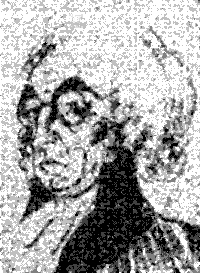
possesses is his addiction." The small town audiences and villages were ever so grateful to the Garbazh’s for bringing Warsaw hit plays to them. They couldn’t care less about who the actors were. They enjoyed the fact that Garbazh was bringing talented, young, intelligent energies to them. His most important Yiddish theatre in the Polish provinces had some very definite positive aspects. Both Garbazhs suffered from inferiority complexes because their real ambition was to one day appear in the capital city, Warsaw. But no one wanted to engage them there. In addition there is another factor, they could play leading roles in these small provincial towns. In the thirties Moshe Garbazh was hired periodically by some Warsaw theatres. However, needless to say they never appeared in leading roles there. Moshe Garbazh wrote a series of theatre pieces, based upon the Jewish way of life. He claimed that one of his plays was even performed in Romania. In Poland he only presented plays that were under his direction in the provinces. Over the years he worked with several dramatic groups. In his last years prior to World War II, Garbazh was involved with the Warsaw drama group, "Cometta," where he became somewhat inventive." Jonas Turkow in his book “Extinguished Stars” describes him further and tells us about his tragic end. "Tall and thin with black eyes, covered with black-framed eyeglasses. A head covered in long black hair upon which he wore a broad black hat. He also wore a suit which was also black. In winter and summer he wore a literary black cravat. He possessed a romantic nature. He was always dreamily in love. Every time that he encountered a new showgirl’s face, it would evoke in him passionate feelings that were never reciprocated. He and she — the couple Moshe and Pella Garbazh — always walked around arm in arm and gave the impression of a couple deeply in love, even though they fought constantly. Normally they spoke Yiddish to one another, but when they argued it was always in Romanian.
When the war broke out, the Garbazhs
were no longer performing in the theatre. He worked for his brother
in his workshop ... When the “actions” started in the Ghetto, the
two of them ran around like mice from one hole to another, looking
for protection. It simply was amazing how this couple could escape
dangers. They often came to us on Milne Street, and we provided them
with bread and marmalade. That’s all that we, ourselves, had to eat.
Their 'home' was underneath the ruins of bombed out buildings — By
the way, the last place in those times, during the last “action” and
shortly before the Warsaw Ghetto uprising was when they disappeared
forever."
|